
Prešporok · the coronation city
First Time Visitor
Everything you need to know for your first trip to Bratislava
Photo by Milan Chudoba on Unsplash
Welcome! Bratislava is one of Europe's smallest and most charming capitals. Compact enough to explore on foot, yet rich in history, culture, and surprisingly good food and coffee. Most visitors are pleasantly surprised by how much this city has to offer.
Whether you're here for a weekend, a day trip from Vienna, or a longer stay, this guide will help you make the most of your time.
02 · First Impressions
What to Expect on a First Visit
A few things that catch most first-timers pleasantly off guard.
A capital you can cross on foot
Bratislava is one of the smallest capitals in Europe, and on a first visit the scale is the first thing that surprises people. The headline sights sit roughly five to twenty minutes apart on foot, so you can stand under the castle, walk down to the river, and be back among the cafes without ever opening a transport map. You really only need a bus or tram for the airport, the day trips, and the outlying parks — the core of the city is yours to wander.
Real value, an hour from Vienna
One of the quiet pleasures of a first trip is how affordable it feels, especially next to its glamorous neighbour an hour upriver. The Old Town and the viewpoints are largely free, museums run roughly €6 to €14, and the weekday set lunch (the denné menu) typically lands around €6 to €7 for a couple of courses — take any figure as a guide, but expect a full day of eating, coffee, and a glass of local wine to cost a fraction of what the same would in Vienna. The currency is the euro.
Grand history meets gentle quirk
Bratislava wears a thousand years of history lightly. One block gives you a Gothic coronation cathedral and a Baroque palace; the next gives you a bronze man grinning out of a manhole. A medieval gate looks across the river to communist-era housing blocks and a brutalist flying-saucer bridge. For a first-timer that mix of the grand and the playful is the city's charm — it never feels like a museum behind glass, and you are never far from something that makes you smile.
A relaxed, unhurried pace
This is not a city of frantic checklists. Because the centre is so compact, you have time to linger: a long coffee, a slow lunch, an evening drink while the castle lights up. Many people who plan a quick stopover end up staying an extra night simply because the pace invites it. Treat Bratislava as somewhere to wander and circle back rather than tick off, and you will see it the way it is best seen.
English goes a long way
The official language is Slovak, but in the tourist areas — the Old Town, the cafes, the main sights — English is widely spoken, particularly by younger people, and German is commonly understood too. You will get by comfortably without any Slovak, though a Dobry den (hello) and Dakujem (thank you) are always appreciated. The practical things first-timers worry about, from menus to ticket machines, are typically available in English.
03 · Must-see
Must-See Attractions
The essentials for every first-time visitor
Bratislava Castle
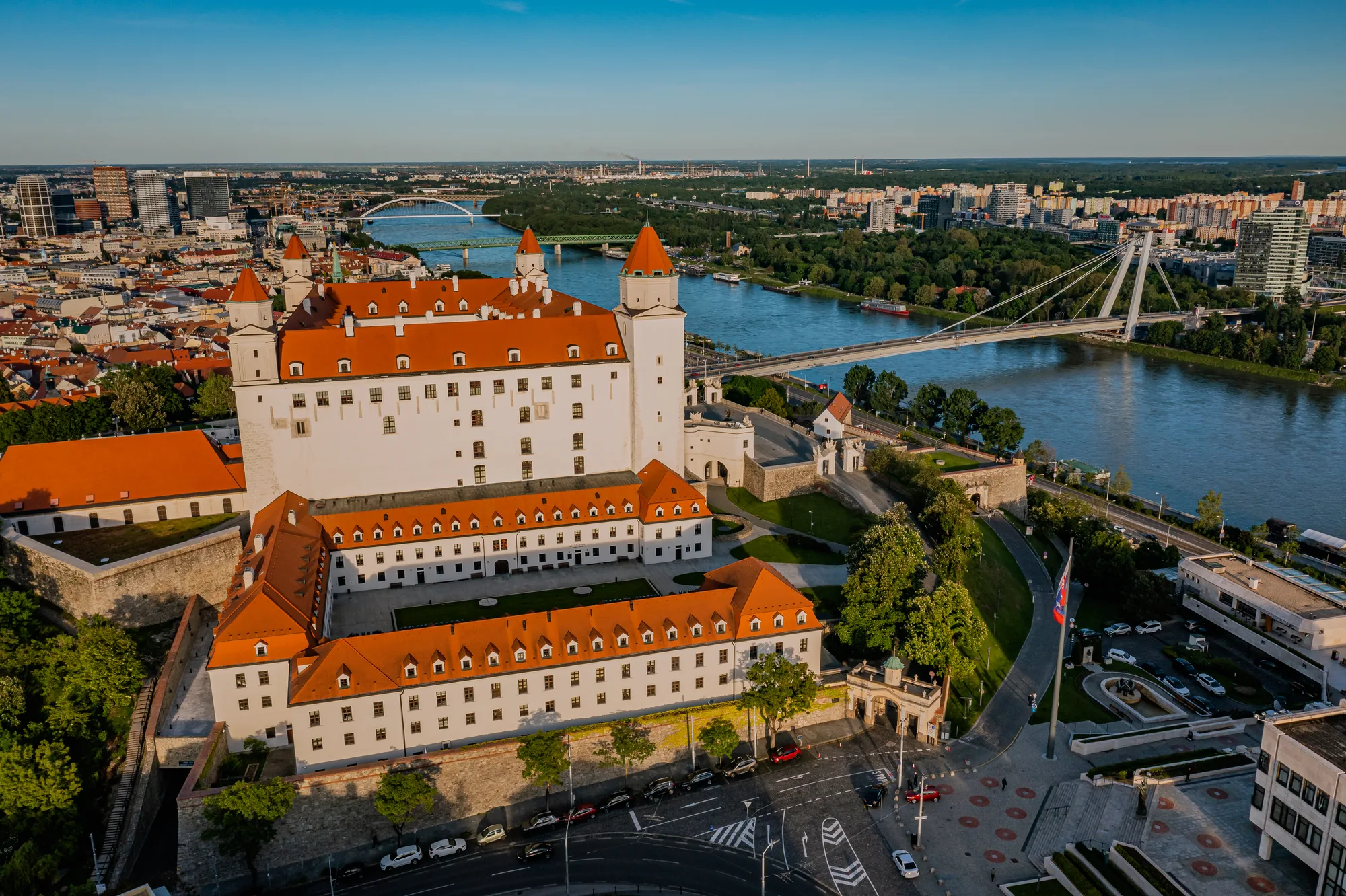
2-3 hoursThe white, four-towered fortress on the hill above the river is the city's defining landmark, and the single best first-visit orientation point: from the terraces you can read the whole layout of Bratislava at a glance, with the Danube, the SNP Bridge, and on clear days the edge of Austria laid out below. The grounds and terraces are free and open daily from around 08:00 to 22:00, so an evening walk up for the view costs nothing; the SNM Museum of History inside the castle is a separate paid ticket (around €14 for an adult). Allow two to three hours if you want the gardens, the courtyards, and the exhibitions, or just half an hour if you only came for the panorama.
Old Town (Stare Mesto)
Half dayThe heart of any first visit is the compact medieval core: a walkable knot of cobblestone lanes, pastel facades, and small squares that you can loop in under an hour and then keep circling back to. This is where you will find the famous bronze statues — Cumil the sewer worker grinning out of a manhole chief among them — plus the Main Square, the pink Primate's Palace, and most of the cafes and restaurants worth your time. Everything here is free to wander; you only pay if you step inside a museum or climb a tower. Give it the better part of a day and let yourself get a little lost.
Blue Church
30 minutesOfficially the Church of St Elizabeth, this Art Nouveau confection in shades of powder blue is one of the most photographed buildings in Slovakia, designed by the Hungarian architect Ödön Lechner and completed in 1913. It sits a gentle fifteen-minute walk from the Main Square, and the exterior — blue walls, blue mosaic tiles, a slender blue tower — is the draw, free to photograph from the street at any hour. It is still an active church, so interior access is limited to certain hours around services; do not count on stepping inside, and treat any glimpse of the equally blue interior, with its blue altar and pews, as a bonus. A short, rewarding detour rather than a half-day commitment.
Michael's Gate
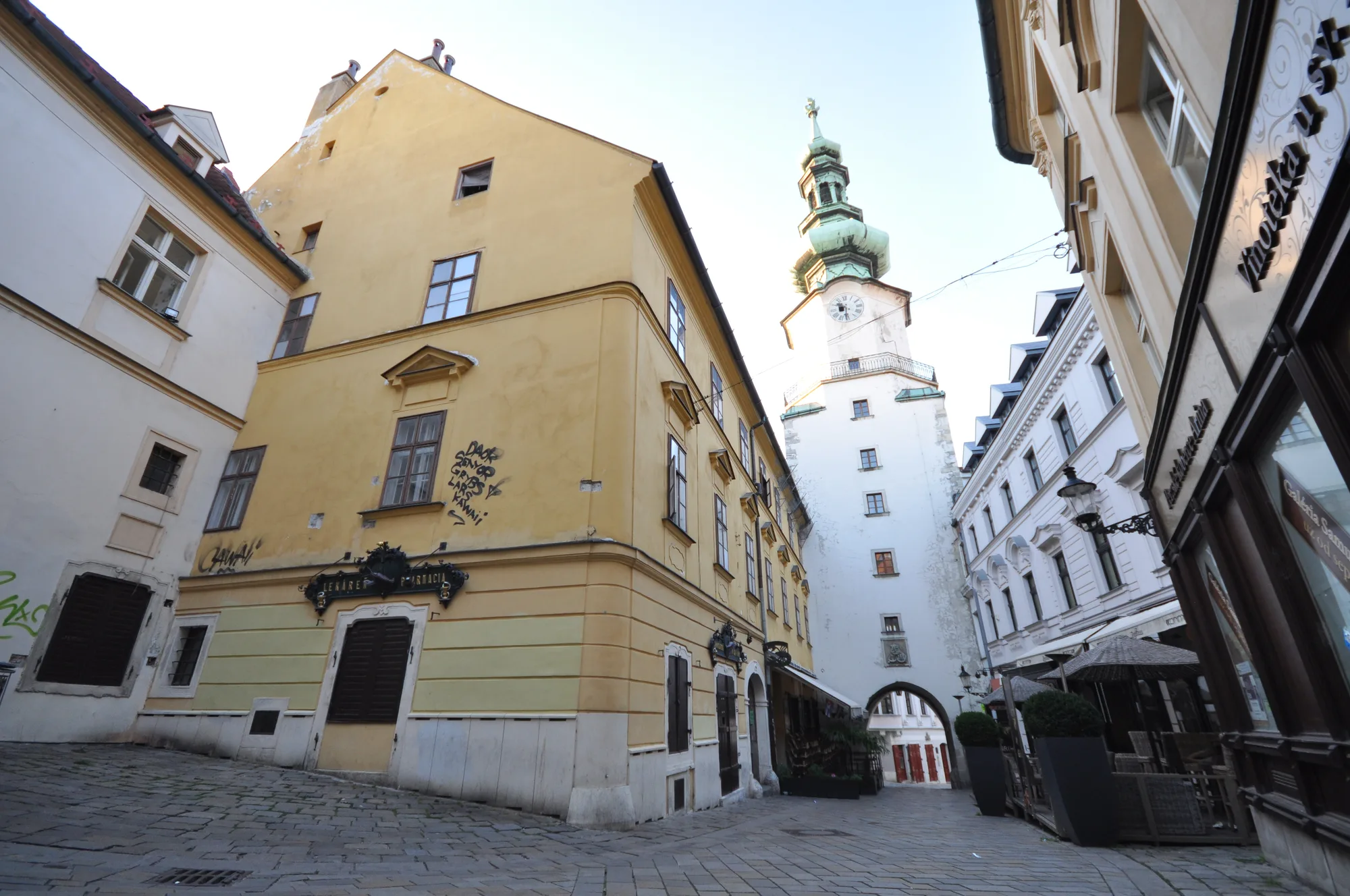
1 hourThe last surviving gate of the medieval city walls, dating to the 14th century, marks the northern entrance to the Old Town and anchors one of its prettiest stretches of lane. You can walk through and around it for free; climbing the tower for a tight, rooftop-level panorama over the Old Town and castle is a paid ticket (around €6 for an adult, €4 reduced). Note that the tower is closed on Tuesdays, so plan around that if the climb is a priority. Even without going up, look for the "Kilometre Zero" marker set into the ground beneath the gate, from which distances to world capitals are measured.
UFO Bridge
1-2 hoursThe flying-saucer-shaped observation deck perched atop the SNP Bridge gives you the city's highest public viewpoint and a 360-degree sweep that, on a clear day, takes in three countries at once. The deck is open daily from 10:00 to 23:00, and adult admission sits in the low teens of euros, a little less for the weekday-morning slot — though the ticket cost is sometimes credited against a drink at the bar up top. It is a fifteen-minute riverside walk from the Old Town across the Danube, and the best time to go is sunset into blue hour, when the castle and bridges light up below.
04 · Essentials
Practical Information
None of this is complicated, and that is rather the point. A first trip to Bratislava asks very little logistical homework: the centre is small, the transport is straightforward, the currency is the euro, and English carries you through the tourist areas. The notes below cover arrival, getting around, money, and language so that the practical side fades into the background and you can spend your attention on the city itself rather than on working out how it runs.
Getting There
- •Bratislava Airport (BTS) - 9km from center, bus 61 connects to center
- •Vienna Airport (VIE) - 60km away, frequent bus connections (1 hour)
- •Train from Vienna - 1 hour, arriving at Hlavna Stanica
- •Day trip from Budapest - 2.5 hours by train or bus
Getting Around
- •Old Town is entirely walkable, with most attractions within about 15 minutes on foot
- •A good tram, bus, and trolleybus network on the IDS BK system covers anywhere further out
- •Tickets are time-based and bought before you board, from a machine or the IDS BK app
- •You really only need transport for the airport, Devin, and the outlying parks
Money Matters
- •The currency is the euro (€); cards are widely accepted across the city
- •Carry some cash for markets, small cafes, and the occasional ticket machine
- •The weekday set lunch (denne menu) is typically around €6 to €7, give or take by venue
- •Bratislava is noticeably cheaper than Vienna or Prague for food, drink, and sights
Language
- •Official language is Slovak
- •English widely spoken in tourist areas and by younger people
- •German also commonly understood
- •Key phrases: Dobry den (hello), Dakujem (thank you), Prosim (please)
05 · Where to stay
Where to Stay
For a first visit, base yourself within easy reach of the Old Town — the city is small enough that even a "quieter" neighbourhood is only a short walk from the action. These three areas suit different priorities, from doorstep sightseeing to calmer evenings to easy train connections.
Old Town (Stare Mesto)
Best for: First-time visitors, sightseeing, and romantic stays who want everything on the doorstep
Vibe: Historic and central, lively in the evenings, and the most walkable base for a short trip
Palisady
Best for: Upscale, quiet stays that are still an easy walk from the castle and the centre
Vibe: Residential, leafy, and elegant — a calmer alternative just above the Old Town
Near Main Station
Best for: Budget travellers and anyone arriving or leaving by train who values easy connections
Vibe: Practical and convenient, well linked by transport, with the centre a short ride or walk away
06 · Itinerary
Sample 2-Day Itinerary
Two days is the sweet spot for a first visit, and because the centre is so compact you can cover a great deal without ever feeling rushed. The plan below front-loads the headline sights — the Old Town and the castle on the first day — and keeps the second day looser for the Blue Church, the quieter lanes, and an optional trip out to Devin. Treat it as a flexible frame rather than a fixed schedule: shuffle the order to chase good light or good weather, and leave room for the long coffees and slow lunches that are half the reason to come here.
Old Town & Castle
- →Morning coffee in a specialty cafe
- →Explore Old Town - main square, Michael's Gate, quirky statues
- →Lunch at a traditional restaurant (try daily menu for value)
- →Afternoon at Bratislava Castle and gardens
- →Sunset drinks at UFO or Slavin
- →Dinner in the Old Town
Hidden Gems & Culture
- →Visit the Blue Church (best light in morning)
- →Coffee at Kaffe Mayer or Mondieu
- →Explore the less-touristy streets - Kapitulska, Bastova
- →Lunch at a local market or food hall
- →Optional: Day trip to Devin Castle by boat
- →Evening wine tasting at National Wine Salon
07 · Logistics
Arrival + Getting Around (First Trip)
These three guides remove the most common first-day friction: airport transfer, ticket logic, and evening confidence.
08 · Weather
Weather-Proof Plans
Rain or winter? These guides keep the itinerary cozy and effortless.
10 · Pitfalls
Common Mistakes to Avoid
09 · The Feel of the City
What a First Trip to Bratislava Is Actually Like
The thing that lands first is the scale. After a big-city capital, Bratislava feels almost domestic: you arrive, drop your bag, and within a few minutes you are already standing in the Main Square wondering where the rest of it is. There is no sprawling list of must-dos to grind through, no metro map to decode. You walk out of the Old Town gate, glance up at the castle on its hill, and realise the whole headline itinerary is within a fifteen-minute radius of wherever you happen to be standing. For a first-timer that compactness is liberating rather than limiting — it turns sightseeing back into wandering.
The second thing is the value, and how quietly it works on you. A strong coffee in a proper coffeehouse, a weekday set lunch that costs less than a sandwich back home, a glass of local wine in the evening, and a free sunset from the castle terraces add up to a full, contented day for very little. An hour upriver, the same day in Vienna would cost several times as much. It is the kind of place where you stop doing the mental arithmetic on every order and simply relax — and that ease, more than any single sight, is what people remember.
And then there is the character: a small capital that mixes the grand and the playful without taking itself too seriously. A coronation cathedral sits a short walk from a bronze man grinning out of a manhole; a medieval gate looks across the Danube to a flying-saucer bridge. English carries you through the tourist areas comfortably, the pace stays gentle, and the Old Town remains pleasant to stroll into the evening. Plenty of visitors come planning a half-day stopover from Vienna and end up wishing they had booked the extra night. Give it two days, walk everywhere, and let the city set the tempo — that is how a first trip here is best spent.
11 · Questions
Frequently Asked Questions
How many days do you need in Bratislava?
Two days is ideal for a first visit: one for the Old Town and castle, and a second for a viewpoint, the river, and a day trip such as Devin. A single day covers the essentials at a brisk pace, while three days suits a relaxed trip with cafe stops and the riverside galleries. Because the centre is so compact, you fit a lot into a short stay.
Is Bratislava worth visiting?
Yes, especially if you like walkable cities, affordable food and wine, and a relaxed pace. Bratislava is smaller and quieter than Vienna, Prague, or Budapest, and that is precisely its appeal: you can see the highlights without big crowds and still have time to sit in a coffeehouse. Many visitors arrive expecting a quick stopover and end up wishing they had given it another night.
Is Bratislava expensive?
It is generally good value by Central European standards, and noticeably cheaper than Vienna an hour away. The Old Town and viewpoints are largely free, museums run roughly €6 to €14, and the weekday set lunch (denne menu) is typically around €6 to €7. The currency is the euro, cards are widely accepted, and it is worth carrying some cash for markets.
Do you need to speak Slovak in Bratislava?
No. Slovak is the official language, but English is widely spoken in the tourist areas and by younger people, and German is commonly understood too. You can navigate sights, menus, and transport comfortably in English. Learning a couple of phrases — Dobry den for hello, Dakujem for thank you, Prosim for please — is a friendly touch but is not necessary to get around.
Is Bratislava walkable?
Very. The Old Town is one of the most compact in Europe, and most headline sights sit roughly five to twenty minutes apart on foot. The castle is about a fifteen-minute uphill walk from the centre, the Blue Church around fifteen minutes from the Main Square, and the UFO deck a riverside stroll across the bridge. You only really need public transport for the airport and the day trips.
Can you visit Bratislava as a day trip from Vienna?
Easily. Trains run frequently between Vienna and Bratislava and take about an hour, so a day trip works well for the Old Town, castle, and a riverside walk. That said, the city rewards an overnight stay: with two days you can add a viewpoint at sunset and a trip out to Devin. If time is tight, though, a single day still covers the highlights.
Is Bratislava safe for tourists?
Bratislava is generally considered a safe, easygoing capital, and the Old Town stays pleasant to wander in the evening. As anywhere, use ordinary common sense: keep an eye on belongings in busy spots and around the main station, and stick to well-lit, populated streets at night. First-time visitors typically find the centre calm and comfortable to explore on foot.
✦ Verify before you go
Sources & official links
We verify prices, hours, and dates against official pages. They change without notice — confirm time-sensitive details at the source before you go.
- Visit Bratislava (official tourist board) — Attractions, opening hours, and current events.
- Bratislava CARD — Which museums are free or discounted, plus transport.
- IDS BK — Bratislava transport — Tickets and fares for buses, trams, trolleybuses.