 Photo: Wikimedia contributors · See source
Western Slovakia Castle Route
Drive through Trenčín, Beckov, Čachtice, Bojnice, Nitra and Banská Štiavnica over five or six days.
- Allow
- 5–6 days
- Route
- 616 km
- Drive time
- 7 hr 53 min
- Stops
- 7
Slovakia’s official Castle Route gives this journey its spine. Trenčín dominates the Váh, Beckov and Čachtice turn limestone heights into dramatic ruins, Bojnice supplies the storybook interior and Nitra reconnects the road with one of the country’s oldest urban centers.
Banská Štiavnica is the deeper finale rather than another castle checkbox. Hill towns and ruins require walking, seasonal opening and safe shoes. Do not climb closed structures or turn unsigned access tracks into parking.
The road, in one glance
Pinch or scroll with Ctrl / ⌘ to zoom
Drawing the route…
The route earns
its distance
Each pin is selected as a place to do something—not merely proof that you passed through.
 Photo: Wikimedia contributors · See source
Bratislava
Start after the city stay with the first Trenčín night already set.
Bratislava (Hungarian: Pozsony; German: Pressburg) is the capital and largest city of Slovakia and the fourth largest of all cities on the river Danube. Officially, the population of the city proper is about 479,000, the wider Bratislava Region exceeds 732,000 inhabitants. The metropolitan area has a population of approximately 1.3 million.
 Photo: Wikimedia contributors · See source
Trenčín
A great castle crowns the old town and Váh Valley from a commanding rock.
Trenčín is a city in western Slovakia of the central Váh River valley near the Czech border, around 95 km (59 mi) from Bratislava. It has a population of more than 55,000, which makes it the eighth largest municipality of the country and is the seat of the Trenčín Region and the Trenčín District. It has a medieval castle, Trenčín Castle, on a rock above the city.
 Photo: Wikimedia contributors · See source
Beckov Castle
A roofless fortress rises almost vertically above the village and river plain.
Beckov Castle (Slovak: Beckovský hrad/Beckov; Hungarian: Beckói vár) is a castle in ruins located above the former town of Beckov in Nové Mesto nad Váhom District, Trenčín Region, western Slovakia. It is a national cultural monument and its present appearance is the result of renovations in the last quarter of the twentieth century and since 2002.
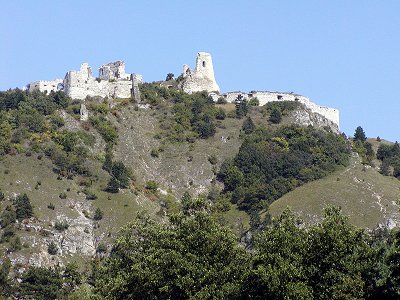 Photo: Wikimedia contributors · See source
Čachtice Castle
Hilltop ruins carry layered medieval history beyond their famous legend.
Čachtice Castle is a castle ruin in Slovakia next to the village of Čachtice. It stands on a hill featuring rare plants, and has been declared a national nature reserve for this reason. The castle was a residence and later the prison of the Countess and alleged serial killer Elizabeth Báthory.
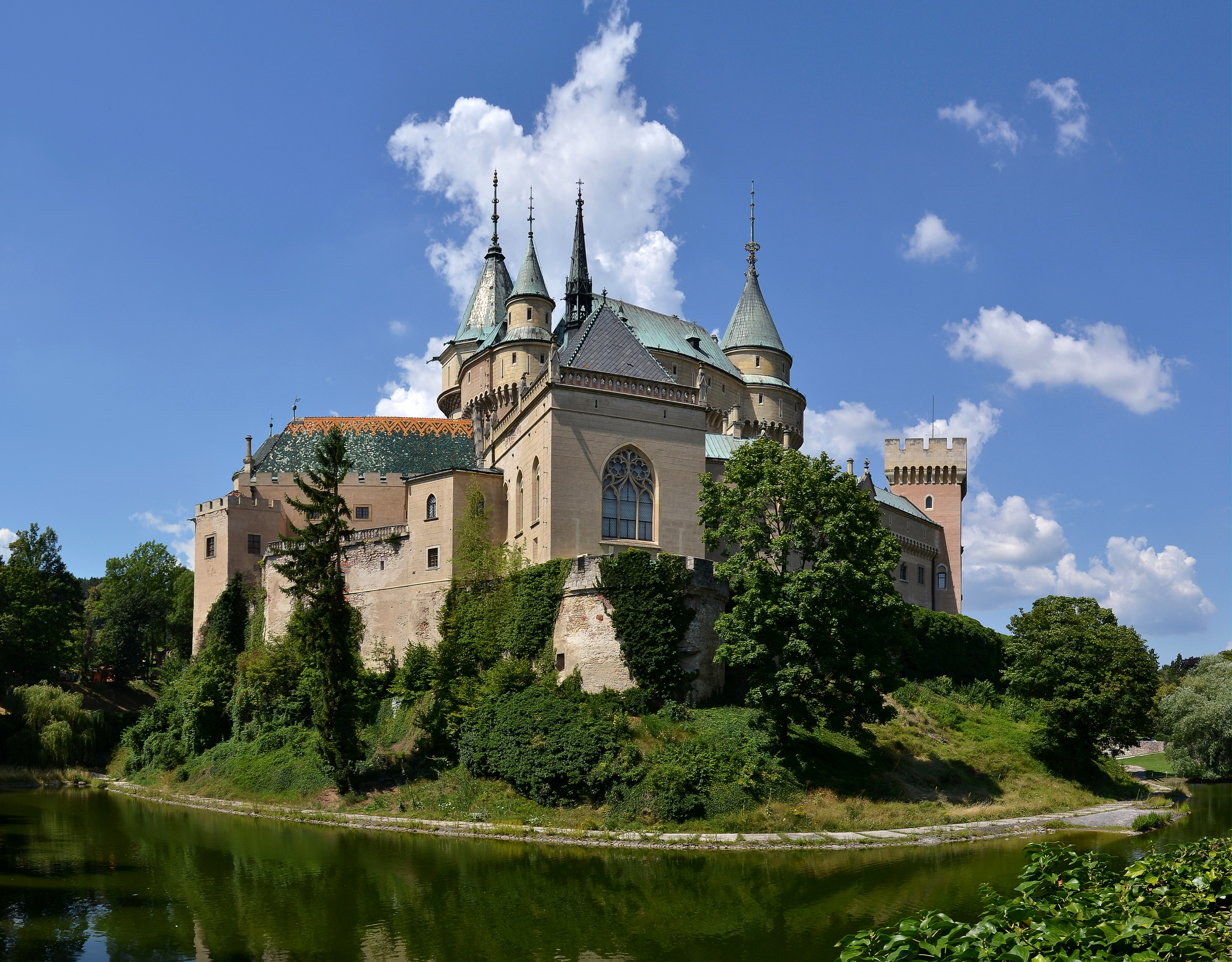
Photo: Wikimedia contributors · See sourceBojnice Castle
Romantic towers and richly staged rooms make Slovakia’s most theatrical castle stop.
Bojnice Castle (Slovak: Bojnický zámok, Hungarian: Bajmóci vár) is a medieval castle in Bojnice, Slovakia. It is a Romanesque castle with some original Gothic and Renaissance elements built in the 12th century. Bojnice Castle is one of the most visited castles in Slovakia, receiving hundreds of thousands of visitors every year and also being a popular filming stage for fantasy and fairy-tale movies.
 Photo: Wikimedia contributors · See source
Nitra
Castle hill, cathedral and a lived-in regional center connect the route to early Slovak history.
Nitra (Hungarian: Nyitra) is a city in southwestern Slovakia, situated at the foot of the Zobor Mountain in the Nitra River Valley about 90 km (56 mi) northeast of the country's capital, Bratislava. With a population of about 78,353, it is the fifth-largest city in Slovakia. Nitra stands on varied terrain, which features both rolling hills and vast plains, particularly to the south.
 Photo: Wikimedia contributors · See source
Banská Štiavnica
A steep UNESCO mining town and surrounding tajchy lakes provide a memorable final base.
Banská Štiavnica, pronounced ) is a town in central Slovakia, in the middle of an immense caldera created by the collapse of an ancient volcano. For its size, the caldera is known as the Štiavnica Mountains. Banská Štiavnica has a population of less than 10,000.
Drive the conditions,
not the itinerary.
Verify castle days and tour times, park below historic sites and approach ruins only on marked footpaths. Avoid rural legs after dark.
Checked against
the people who run it
Distances and driving times are planning estimates. Conditions, closures, ferries, permits and park rules can change, so check the linked official guidance before setting out.